The shores of Lake Como read like a living chronicle of Italian art, architecture, and aristocratic aspiration. For over five centuries, nobles, industrialists, and visionaries have commissioned extraordinary residences here, each villa a chapter in an ongoing conversation between human creativity and natural splendour. Today, many of these estates open their gates to visitors, offering rare glimpses into private worlds of terraced gardens, priceless art collections, and views that have inspired poets from Pliny the Younger to George Clooney.
What follows is your complete guide to the six essential villas of Lake Como — from the cinematic romance of Balbianello to the botanical wonders of Carlotta, from the scholarly gardens of Melzi to the wild heights of Serbelloni. Each possesses its own character, its own history, its own particular magic. Plan carefully, for these are places that reward unhurried attention.
Villa del Balbianello: The Cinematic Masterpiece
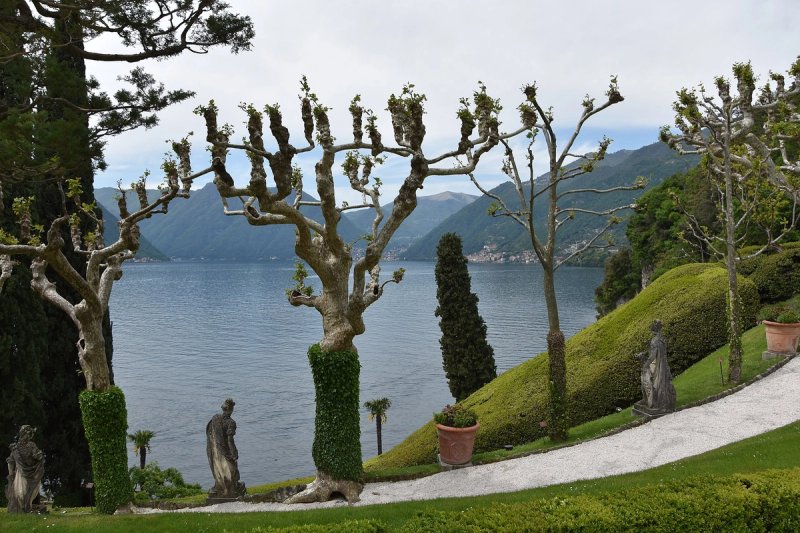
There is no more photographed residence on Lake Como than Villa del Balbianello, and for good reason. Perched on the tip of a wooded promontory at Lenno, the villa seems to float above the water, its famous loggia framing views that have made directors weep with gratitude. Casino Royale, Star Wars: Episode II, and A Month by the Lake all captured its magic — though no camera has yet done justice to experiencing it in person.
The villa's story begins in 1787 when Cardinal Angelo Maria Durini transformed a Franciscan monastery into a private retreat for literary pursuits. But it was the twentieth-century explorer Count Guido Monzino — leader of the first Italian expedition to Everest and the first to reach the North Pole by surface — who shaped Balbianello into its current form. His collections of mountaineering equipment, Pre-Columbian art, and African artefacts fill the interiors, transforming the villa into a cabinet of curiosities from the age of adventure.
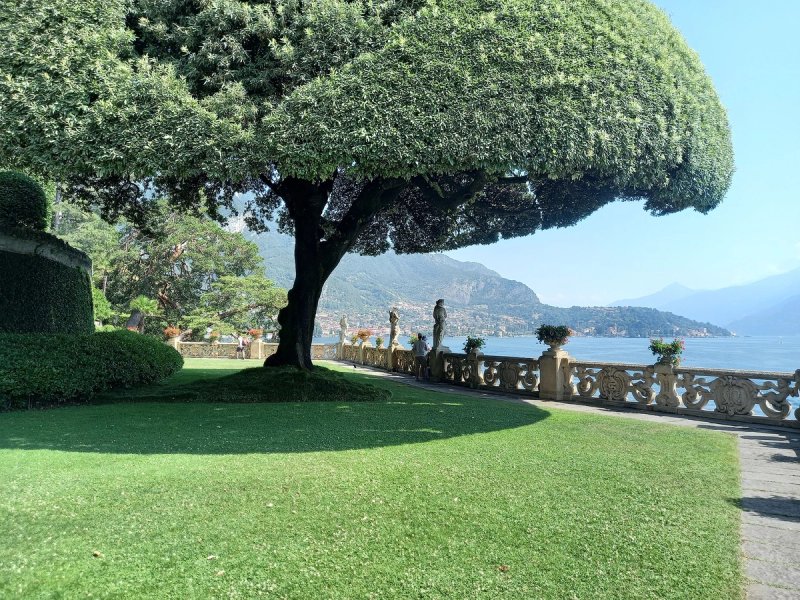
Access to Balbianello is itself an adventure. No road reaches the promontory; visitors must either walk 25 minutes from Lenno through olive groves and woodland, or arrive by taxi boat from the waterfront — the latter being the approach we recommend, if only for that first glimpse of the villa emerging from the cypresses.
Address: Via Guido Monzino 1, Tremezzina (Lenno)
Hours: Mid-March to November, daily except Monday and Wednesday, 10:00–18:00 (last garden entry 17:00, last villa tour 16:00)
Tickets: Garden only €13–14 | Villa guided tour + garden €22 | FAI members free
Booking: Essential — advance reservation required
Website: fondoambiente.it/villa-del-balbianello-eng
Villa Carlotta: Gardens of Wonder
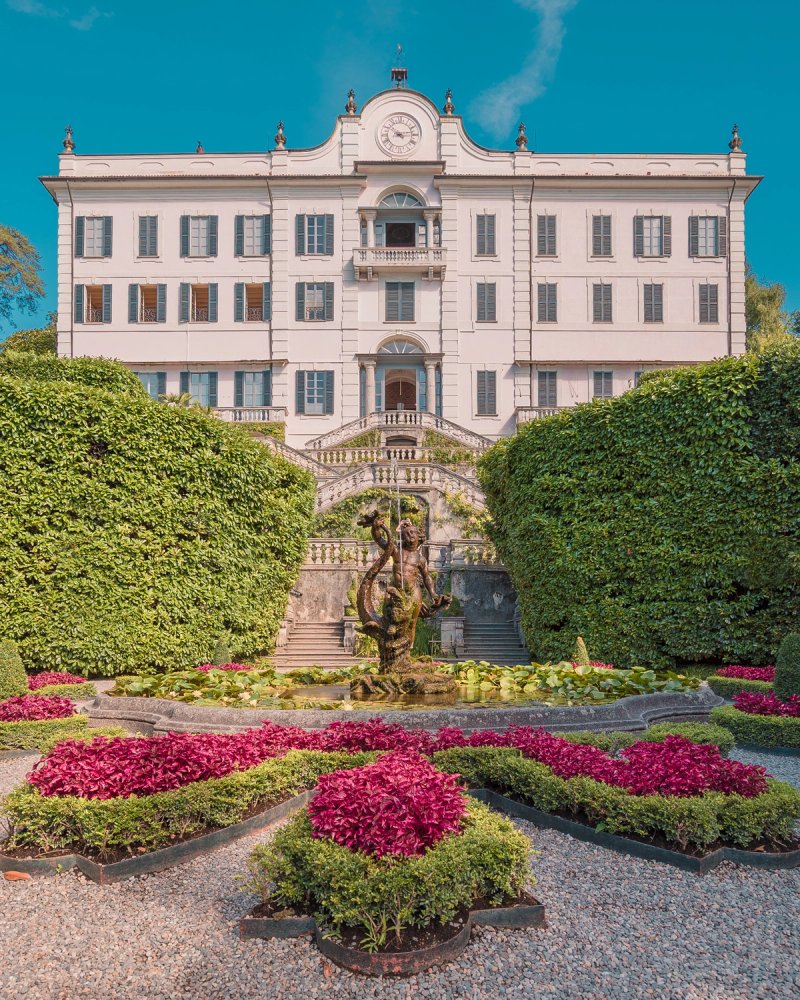
If Balbianello seduces through romance, Villa Carlotta overwhelms through abundance. Eight hectares of botanical gardens — 70,000 square metres of colour, form, and fragrance — surround a neoclassical villa housing one of Italy's finest collections of Romantic sculpture. This is not a place for the rushed visitor; this is a place for the surrendered.
The villa takes its name from Princess Carlotta of Prussia, who received it as a wedding gift in 1847 from her mother, Princess Marianne of the Netherlands. But the gardens' glory began earlier, when previous owner Count Gian Battista Sommariva — a lawyer who rose to power during Napoleon's Italian campaign — began assembling an extraordinary art collection inside and planting exotic specimens outside.
Spring is Carlotta's crowning season, when over 150 varieties of azaleas and rhododendrons ignite the hillside in waves of pink, crimson, and white. But every season offers its revelations: the ancient camellias of March, the roses of June, the autumn colours of the English garden, the winter silhouettes of 800-year-old planes and cedars from Lebanon. The citrus house, sequoia grove, and bamboo garden ensure that even the most seasoned botanist will discover something new.
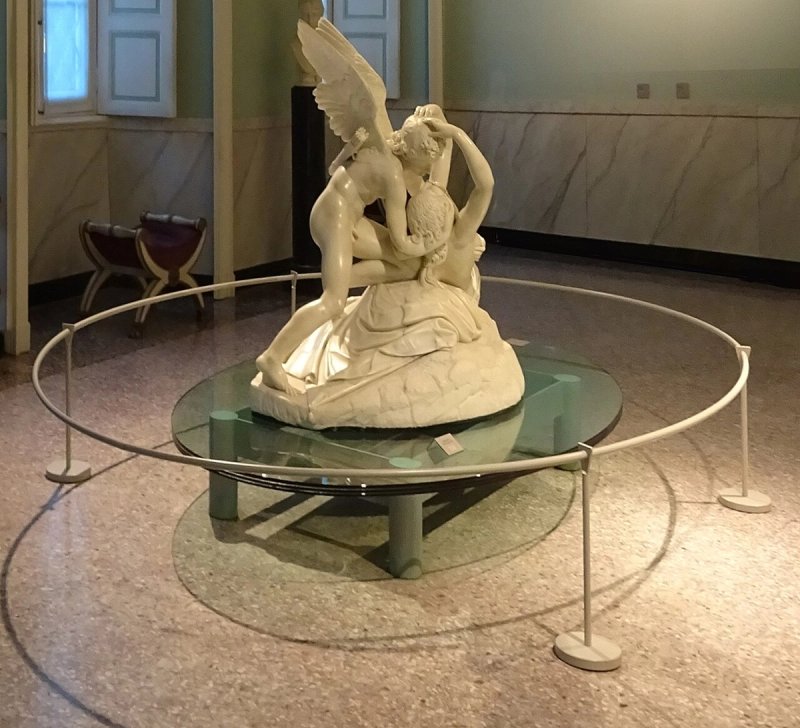
Inside, Antonio Canova's celebrated Cupid and Psyche greets visitors, alongside works by Bertel Thorvaldsen and paintings by Francesco Hayez. The rooms retain their original neoclassical furniture, creating the sensation of visiting a still-inhabited palazzo rather than a museum.
Address: Via Statale 5605, Tremezzina (Tremezzo)
Hours: March 21–October 19: 10:00–19:00 daily (last entry 18:00) | Reduced hours November and winter weekends | Winter visits by reservation
Tickets: Adults €15–17.50 | Over 65 €13–15 | Children 6–18 €6–7 | Under 6 free | Family (2+2) €30
Website: villacarlotta.it/en/
Villa Melzi d'Eril: The Poet's Garden
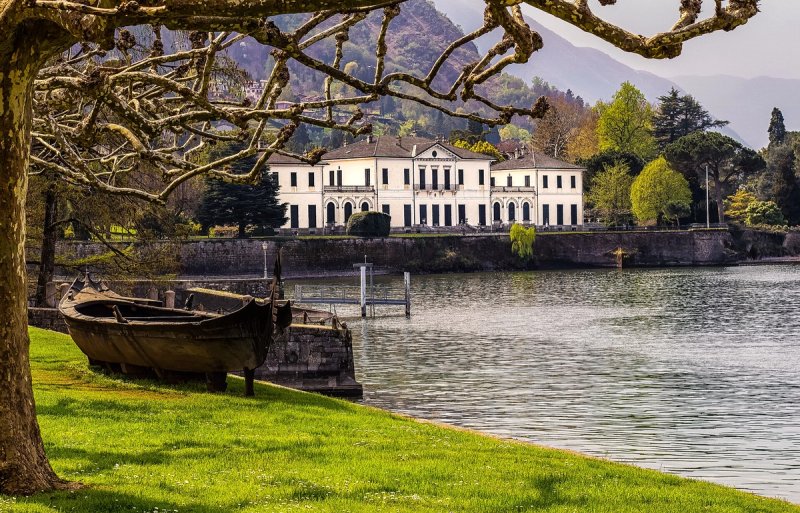
In Bellagio, where the lake divides into its two southern branches, the Gardens of Villa Melzi offer something subtler than Carlotta's floral fireworks but equally captivating: a landscape designed to inspire contemplation rather than amazement. Franz Liszt composed here; Stendhal walked these paths; and the Japanese-style pond, with its collection of water lilies and weeping willows, has appeared in more wedding photographs than perhaps any other spot on the lake.
Francesco Melzi d'Eril, Duke of Lodi and Vice-President of the Napoleonic Italian Republic, commissioned the villa in 1808. The great architect Luigi Canonica — designer of Milan's Arena Civica — created both the neoclassical villa and the English-style gardens, working with agronomist Luigi Villoresi to achieve that studied naturalism that makes every view feel both accidental and perfect.
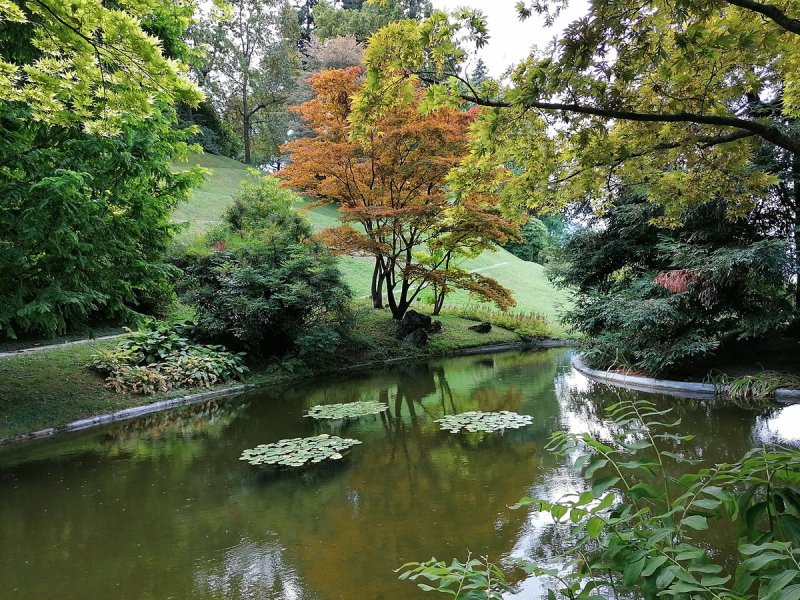
The gardens stretch along the lakefront, connecting Bellagio to the village of Loppia. A long avenue of plane trees leads from the boat dock, while intimate spaces unfold throughout: the Moorish temple, the artificial grotto, the Egyptian-style orangery housing a small museum. Sculptures by Comolli and Canova dot the grounds, and the family chapel contains what many consider the finest example of neoclassical funerary art in Lombardy.
Address: Lungolario Manzoni, Bellagio (entrance from Bellagio or Loppia)
Hours: March 22–October 31: 10:00–19:00 daily (last entry 18:30)
Tickets: Adults €10 | Groups €8 | Children under 12 free
Note: Villa interior not open to visitors; gardens and museum only
Website: giardinidivillamelzi.it/en/
Villa Serbelloni: The Scholars' Retreat
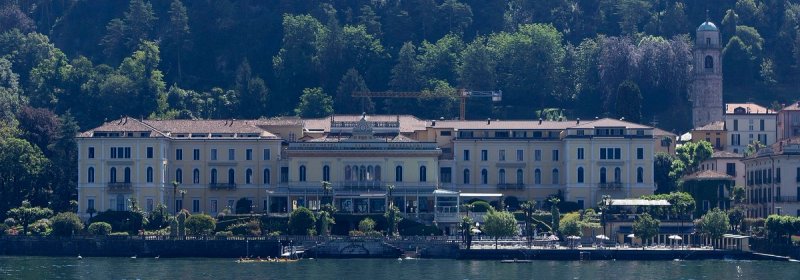
Not to be confused with the Grand Hotel Villa Serbelloni on the waterfront, this Villa Serbelloni crowns the rocky promontory that forms Bellagio's historic heart. Since 1959, the Rockefeller Foundation has maintained the estate as a residential study centre for scholars and artists — making it perhaps the most exclusive address in a town of exclusive addresses. Fortunately, the park remains accessible through guided tours.
The fifty-acre grounds offer what may be Lake Como's most spectacular panorama. From the ruins of the medieval fortress at the promontory's summit, the view sweeps across both branches of the lake — the Como branch stretching south toward Milan, the Lecco branch east toward the Grigna mountains. According to legend, this is where Pliny the Younger built his villa Tragoedia, though archaeologists remain diplomatically sceptical.
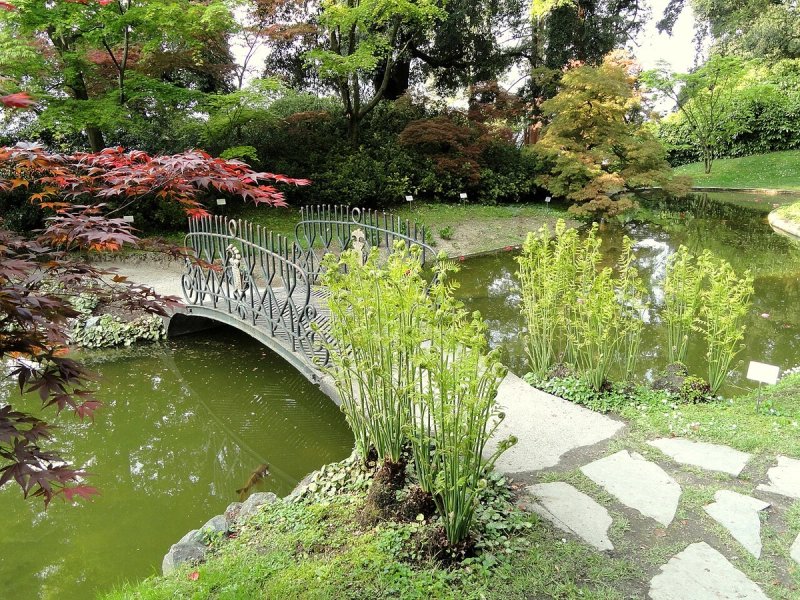
The guided tours — the only way to visit — wind through terraced gardens thick with exotic vegetation, past statues, fountains, and the small artist cottages where Rockefeller Fellows work in splendid isolation. The walk is demanding (the first hour involves significant uphill climbing), but the vistas reward every step. On clear days, the snowcapped Alps seem close enough to touch.
Address: Piazza della Chiesa 14, Bellagio (meeting point at Promobellagio tourist office)
Hours: April–October, guided tours at 11:00 and 15:30 (duration approximately 90 minutes)
Tickets: Adults €13 | Children €5
Booking: Essential — advance reservation via bellagiolakecomo.com
Note: Not suitable for visitors with mobility difficulties; significant uphill walking required
Villa Olmo: The City's Crown Jewel
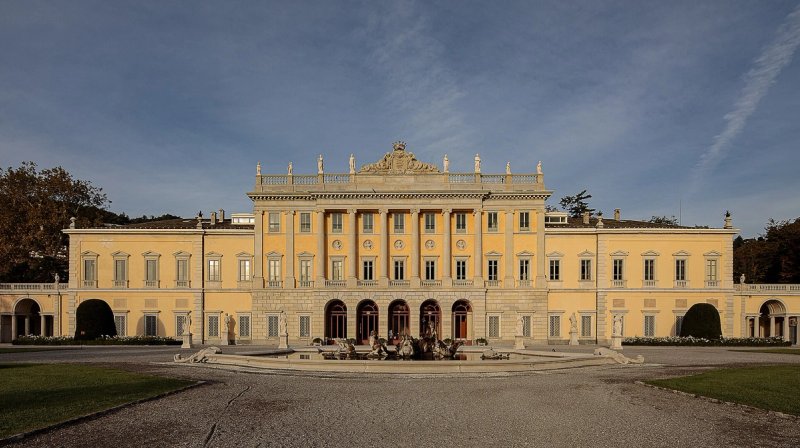
In Como city itself, at the end of a beautiful lakeside promenade, Villa Olmo represents the apotheosis of Lombard neoclassical architecture. Built between 1782 and 1824 for the Odescalchi family, later sold to the Visconti di Modrone and finally acquired by the municipality in 1925, the villa now serves as Como's premier venue for world-class art exhibitions.
The interiors are spectacular when open — frescoes by Andrea Appiani and Domenico Pozzi adorn the ceilings, while the theatre added in 1883 boasts acoustics that still attract performers. But even without an exhibition, the grounds alone justify the visit. The Italian garden facing the lake features symmetrical parterres, a central fountain, and statues of pagan gods, while the English garden behind the villa shelters over 800 trees including horse chestnuts, cedars of Lebanon, and a magnificent plane tree said to be 800 years old.
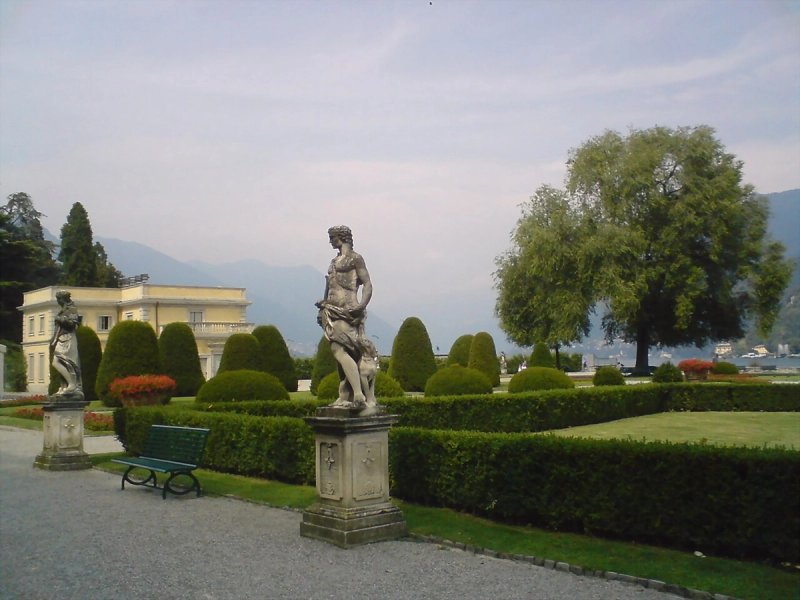
Villa Olmo forms part of the Chilometro della Conoscenza (Kilometre of Knowledge), a cultural itinerary linking three lakeside villas — Olmo, del Grumello, and Sucota — through connecting gardens. The walk alone, with its changing views of lake and mountain, constitutes one of Como's great pleasures.
Address: Via Simone Cantoni 1, Como
Hours: Gardens open daily 7:00–19:00 (winter) to 23:00 (summer) | Villa interior Tuesday–Sunday 10:00–18:00 during exhibitions only
Tickets: Gardens free | Exhibitions typically €10–15
Website: villaolmocomo.it
Villa Monastero: From Nuns to Nobel Laureates
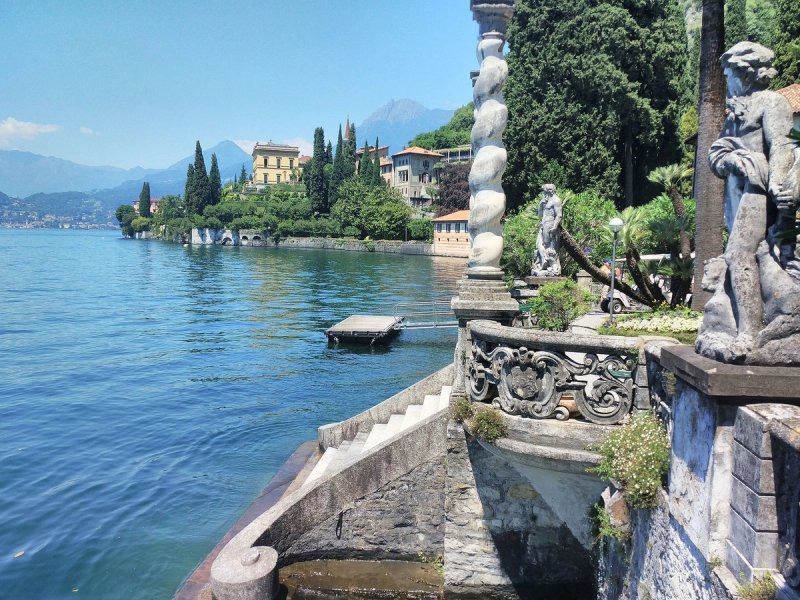
Across the lake from Bellagio, in the picturesque village of Varenna, Villa Monastero offers something the other villas cannot: a 2-kilometre botanical garden stretching continuously along the waterfront, combined with a house museum preserving four centuries of eclectic interior design. The villa's name remembers its origins — a thirteenth-century Cistercian convent suppressed by the Bishop of Como in 1567, supposedly for the nuns' excessive worldliness.
The subsequent private owners — industrialists and aristocrats — layered style upon style until the villa became a showcase of Eclecticism: Moorish arches beside Baroque mirrors, Art Nouveau alongside Renaissance. Fourteen furnished rooms now form the Casa Museo, each more surprising than the last. But it is the Fermi Hall that draws physicists from around the world — here, in 1954, the legendary Enrico Fermi delivered his final lectures, just months before his death.
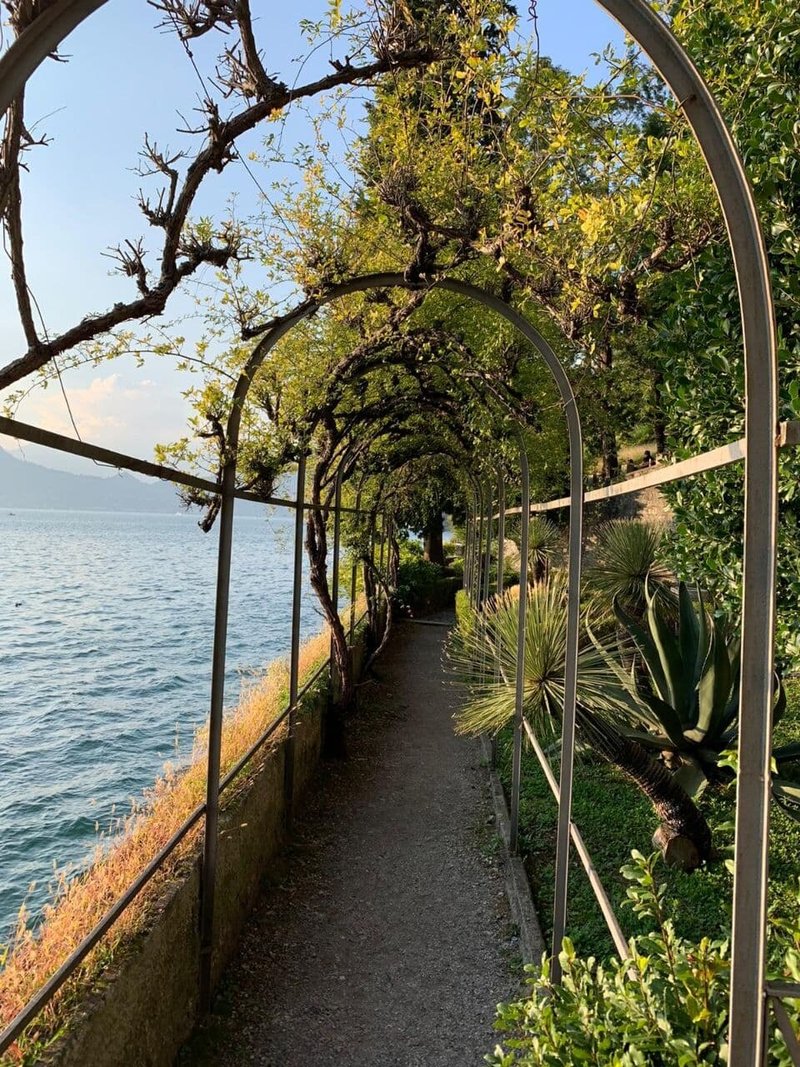
The botanical garden exploits Lake Como's microclimate to grow species from across the globe: citrus trees, palms, agaves, and cycads flourish among more familiar European plantings. The garden's length means constant variety — one moment Mediterranean, the next almost tropical — with the lake glittering through the vegetation at every turn.
Address: Viale Giovanni Polvani 4, Varenna
Hours: April–September 9:30–19:30 daily (until 20:00 June–August) | October 10:00–18:00 | Winter weekends 10:00–17:00
Tickets: Garden + Museum €10 | Garden only €8 | Reduced rates available
Booking: Recommended — advance reservation via villamonastero.eu
Properties on Lake Como
Discover your dream home on the Italian lakes
Planning Your Villa Itinerary
No single day can do justice to Lake Como's villas, though with careful planning you might visit two — perhaps Balbianello and Carlotta, both in Tremezzina, or Melzi and Serbelloni, both in Bellagio. The ferry system connects all these locations, and timing your visits around boat schedules adds its own pleasure to the day.
Spring brings the gardens to their peak — Carlotta's azaleas in April and May, Melzi's wisteria in May, Monastero's roses in June. But autumn offers quieter visits and spectacular foliage, while winter reveals the architectural bones of these estates beneath bare branches. Summer, predictably, brings crowds; morning visits and weekday scheduling help.
One strategy we particularly favour: base yourself in Bellagio for three nights, dedicating one day to the Tremezzina villas (ferry to Lenno for Balbianello, walk or taxi to Carlotta), one day to Bellagio's own treasures (Melzi in the morning, Serbelloni in the afternoon), and one day to Varenna (Villa Monastero, plus the charming old town). Villa Olmo awaits those spending time in Como city itself.
Practical Tips for Villa Visits
Book ahead: Balbianello and Serbelloni require reservations; Carlotta and Monastero strongly recommend them in high season. Check opening days carefully — most villas close at least one weekday. Wear comfortable shoes; these gardens involve significant walking, often on gravel paths and uneven terrain. Bring water and sun protection in summer, layers in shoulder seasons.
Photography: All villas permit photography in gardens; interior policies vary. Tripods generally prohibited. For serious photography, consider visiting at opening time when light is soft and crowds minimal.
Dining: Most villas have no cafes; plan accordingly. Pack a picnic for garden enjoyment (where permitted), or schedule visits around meals in nearby villages. Tremezzo, Bellagio, and Varenna all offer excellent lakeside dining options.